
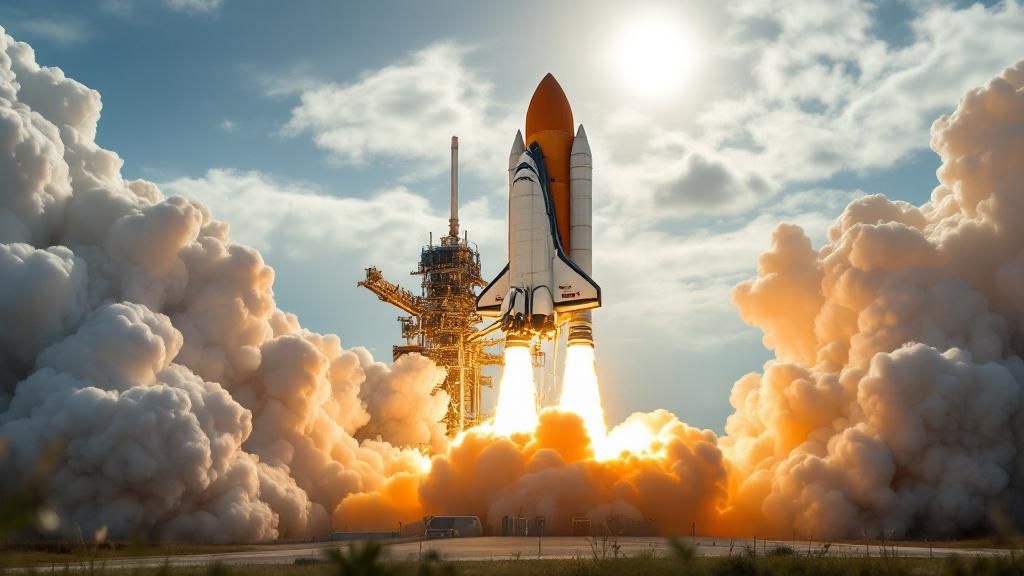
Nasa’s Artemis II crew has officially commenced a historic 10-day mission around the Moon, blasting into space in what marks a significant milestone for the agency’s ambitious space exploration initiative. The manned vehicle, which lifted off from Florida, will avoid landing on the Moon’s surface but instead orbit the Moon whilst travelling further from Earth than any human has ever ventured before. This mission follows the successful unmanned Artemis I flight in 2022 and constitutes a vital foundation towards Nasa’s ultimate goal of establishing sustained Moon exploration and eventually reaching Mars in the 2030s. The journey highlights humanity’s fresh dedication to pushing the boundaries of space exploration and readying for the demands of space travel between planets.
A Fresh Era of Deep-Space Exploration
The Artemis II mission represents a watershed moment in humanity’s return to lunar exploration after a gap of more than fifty years since the Apollo programme ended. By travelling beyond Earth than any previous crewed mission, the astronauts will obtain invaluable data on radiation exposure, life support systems, and human performance in deep space—critical information that will inform future missions. This ambitious undertaking demonstrates Nasa’s faith in its updated spacecraft and launch vehicles, which have been significantly enhanced and modernised since the original Apollo era. The mission’s accomplishment will validate the agency’s technical expertise and bolster international faith in its roadmap for ongoing space exploration.
Beyond the immediate scientific goals, Artemis II stands as a testament to global collaboration and technological advancement. The mission builds upon decades of experience gained from the ISS programme and incorporates lessons learned from multiple automated lunar probes. Achievement will not only motivate a fresh wave of scientists and engineers but also create opportunities for setting up a permanent lunar base and eventual human missions to Mars. The crew’s journey around the Moon will seize the world’s imagination whilst advancing humanity’s understanding of our place in the cosmos and our ability to venture into distant worlds.
- Crew will travel further from Earth than any human before
- Mission gathers essential deep-space radiation and life support data
- Tests upgraded spacecraft systems in preparation for upcoming Moon missions
- Lays groundwork for Mars missions in the 2030s
The Mission Overview and Scientific Objectives
A Ten-Day Lunar Orbit
The Artemis II mission will span a meticulously scheduled decade-long voyage that transports the team on a circumlunar trajectory avoiding descent to the lunar surface itself. During this period, the astronauts will conduct extensive observations of the Moon’s terrain, evaluating messaging networks and navigation procedures that will be crucial for future landing missions. The crew will perform vital maintenance checks on the spacecraft whilst moving around our celestial neighbour, collecting information on how the vehicle operates in the challenging realm of deep space. This careful procedure allows Nasa to confirm vital components before undertaking the increased complexity of a crewed lunar landing in later operations.
Throughout the 10-day voyage, the crew will record their experiences through photography, video, and scientific measurements that will improve our understanding of the lunar environment. The longer timeframe of the expedition offers unprecedented opportunity to examine the mental and physical effects of space exploration on crew members. Every observation, every equipment inspection, and every reading adds to a growing database of knowledge that will guide the design and execution of future Artemis missions. The mission represents a deliberate, methodical advancement towards our final objective of long-term Moon exploration.
Breaking Record Distances
The Artemis II crew will venture further from Earth than any human being has ever travelled, breaking the distance records set during the Apollo 13 mission in 1970. This extraordinary achievement underscores the progress in spaceflight technology and the revived determination driving modern space exploration. As the spacecraft follows its lunar orbit path, the astronauts will experience the deep solitude of deep space whilst preserving continuous communication with mission control on Earth. Breaking this historic distance record carries profound importance, marking humanity’s passage back toward the outer reaches of our cosmic region after over five decades.
The record-breaking distance will subject the crew to radiation levels significantly higher than those encountered in low Earth orbit, providing crucial data on shielding effectiveness and health risks associated with deep-space travel. Understanding these hazards is fundamental to developing protective measures for longer missions to Mars and beyond. Scientists will monitor the crew’s exposure meticulously, using the mission as a real-world test in human adaptation to the extreme conditions of deep space. This information will prove invaluable for designing more secure vehicles and developing medical protocols for future interplanetary explorers venturing even further from home.
Expanding on the Artemis I Accomplishment
The Artemis II mission constitutes a key advancement in NASA’s far-reaching lunar exploration program, drawing from the accomplishments of its unmanned predecessor, Artemis I, which launched in 2022. That opening mission confirmed the Space Launch System rocket and Orion spacecraft, establishing their ability to function safely in the severe conditions of deep space. The information gathered during Artemis I’s robotic moon-orbit journey supplied engineers with essential understanding into vehicle performance, thermal management, and positioning technology. With these essential knowledge gained, NASA has refined and enhanced the spacecraft systems, clearing the path for human crews to safely complete the more complex Artemis II mission.
The progression from Artemis I to Artemis II exemplifies the careful methodology NASA has established for its lunar exploration strategy. Rather than rushing crewed missions, the agency emphasised comprehensive testing and assessment of all systems in genuine orbital conditions. This careful, data-driven approach has instilled confidence in both the scientific community and the public that the mission can be executed with safety. The achievement of Artemis I effectively transformed the Artemis programme from theoretical planning into working reality, confirming that humanity possesses the technological capability to send humans back to the Moon and venture beyond.
| Mission | Key Achievement |
|---|---|
| Artemis I (2022) | Successful uncrewed circumlunar flight validating Space Launch System and Orion spacecraft |
| Artemis II (2025) | First crewed lunar mission with crew travelling further from Earth than ever before |
| Artemis III (planned) | Crewed lunar landing with astronauts returning to the Moon’s surface |
The Journey to Mars and further afield
Whilst Artemis II captures headlines as a noteworthy feat in its own right, NASA considers this mission as a key milestone on a considerably more ambitious trajectory. The ultimate objective of the Artemis programme extends well beyond lunar exploration; it reflects humanity’s deliberate march towards Mars. By the 2030s, NASA seeks to develop the specialised capabilities, procedural frameworks, and sustaining technologies required for crewed missions to the Red Planet. Each mission in the Artemis sequence—from the uncrewed Artemis I through the planned lunar landings of Artemis III and beyond—delivers essential knowledge that will meaningfully shape and enable future interplanetary expeditions. The lessons learned from working in the lunar environment will prove invaluable when space explorers undertake the far more difficult journey to Mars.
The strategic value of the Moon within this larger context must not be underestimated. NASA envisions the Moon not merely as a objective, but as a training ground and feasible operations hub for deep-space missions. Proposed Moon bases could operate as venues for assessing next-generation propulsion technology, conducting prolonged space walks, and perfecting techniques for resource use in alien settings. By developing expertise in Moon-based activities—a location just three days away from Earth—NASA will acquire the knowledge needed to manage human missions spanning months to travel to Mars. This methodical progression from orbital space to the Moon to Mars represents a strategically designed growth in human capability, ensuring that each step develops from proven successes and mitigates risks for later, increasingly challenging endeavours.
- Artemis missions establish critical frameworks for extended human exploration of deep space
- Lunar operations provide development platform for technologies required for Mars missions
- Multi-year programme aims to achieve human landing on Mars by the 2030s
- Moon-based infrastructure could enable upcoming deep-space missions and material harvesting
- Artemis programme reflects our dedication to advancing discovery beyond Earth orbit
