
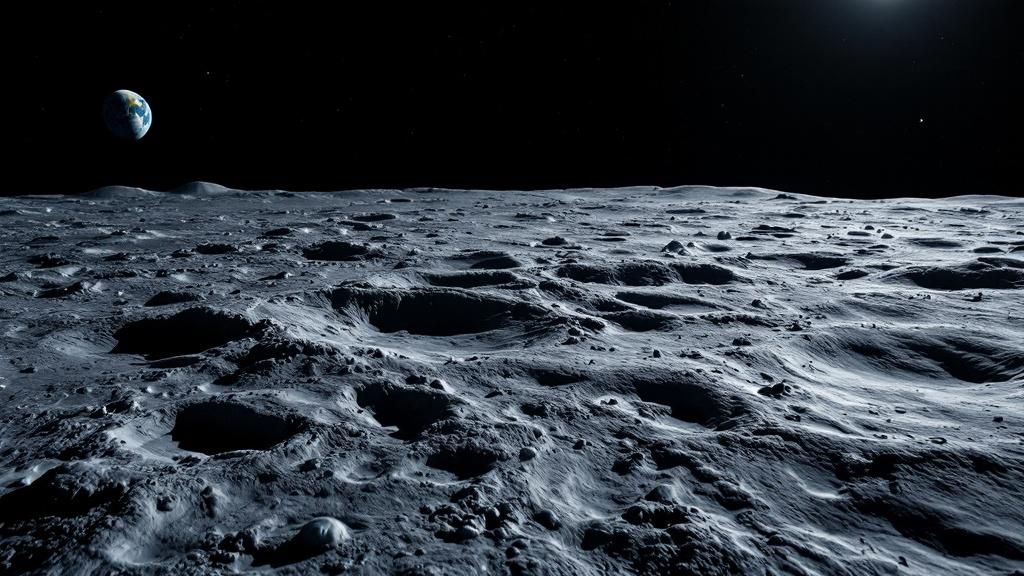
America is getting ready to return to the Moon in a way it hasn’t done for more than half a century. In the days ahead, the National Aeronautics and Space Administration (Nasa) will launch the Artemis II mission, sending four astronauts on a voyage around the Moon. Whilst the nineteen sixties and seventies Apollo missions saw a dozen astronauts walk on the lunar surface, this fresh phase in space exploration brings different ambitions altogether. Rather than simply planting flags and gathering rocks, the modern Nasa lunar initiative is driven by the prospect of mining valuable resources, setting up a lasting lunar outpost, and eventually leveraging it as a launching pad to Mars. The Artemis initiative, which has required an estimated $93 billion and involved thousands of scientific and engineering professionals, represents the American response to growing global rivalry—particularly from China—to dominate the lunar frontier.
The materials that establish the Moon worth returning to
Beneath the Moon’s barren, dust-covered surface lies a wealth of valuable materials that could revolutionise humanity’s approach to space exploration. Scientists have located various substances on the lunar landscape that mirror those found on Earth, including uncommon minerals that are becoming harder to find on our planet. These materials are essential for modern technology, from electronics to clean energy technologies. The concentration of these resources in particular locations makes extracting these materials potentially worthwhile, particularly if a permanent human presence can be established to mine and refine them effectively.
Beyond rare earth elements, the Moon contains substantial deposits of metals such as iron and titanium, which could be utilised for building and industrial purposes on the lunar surface. Another valuable resource, helium—found in lunar soil, has numerous applications in medical and scientific equipment, such as cryogenic systems and superconductors. The wealth of these materials has encouraged space agencies and private companies to view the Moon not just as a destination for research, but as a potential economic asset. However, one resource stands out as far more critical to maintaining human existence and enabling long-term lunar habitation than any metal or mineral.
- Rare earth elements located in particular areas of the moon
- Iron and titanium for building and production
- Helium gas for scientific instruments and medical apparatus
- Extensive metal and mineral reserves across the lunar surface
Water: one of humanity’s greatest breakthrough
The primary resource on the Moon is not a metal or rare mineral, but water. Scientists have identified that water exists trapped within certain lunar minerals and, most importantly, in substantial quantities at the Moon’s polar regions. These polar areas contain perpetually shaded craters where temperatures remain exceptionally frigid, allowing water ice to gather and persist over millions of years. This discovery significantly altered how space agencies view lunar exploration, transforming the Moon from a lifeless scientific puzzle into a possibly liveable environment.
Water’s significance to lunar exploration should not be underestimated. Beyond providing drinking water for astronauts, it can be separated into hydrogen and oxygen through the electrolysis process, providing breathable air and rocket fuel for spacecraft. This capability would substantially lower the cost of space missions, as fuel would no longer need to be transported from Earth. A lunar base with water availability could achieve self-sufficiency, supporting long-term human occupation and serving as a refuelling hub for missions to deep space to Mars and beyond.
A new space race with China in the spotlight
The initial race to the Moon was essentially about Cold War competition between the United States and the Soviet Union. That geopolitical competition drove the Apollo programme and resulted in American astronauts reaching the lunar surface in 1969. Today, however, the competitive landscape has shifted dramatically. China has emerged as the main competitor in humanity’s journey back to the Moon, and the stakes seem equally significant as they did during the space competition of the 1960s. China’s space programme has made remarkable strides in recent years, successfully landing robotic missions and rovers on the lunar surface, and the country has officially declared far-reaching objectives to land humans on the Moon by 2030.
The reinvigorated urgency in America’s Moon goals cannot be disconnected from this rivalry with China. Both nations understand that establishing a presence on the Moon carries not only scientific prestige but also strategic significance. The race is not anymore simply about being first to touch the surface—that milestone was achieved over 50 years ago. Instead, it is about gaining access to the Moon’s most resource-rich regions and creating strategic footholds that could influence space activities for decades to come. The rivalry has transformed the Moon from a collaborative scientific frontier into a disputed territory where national interests collide.
| Country | Lunar ambitions |
|---|---|
| United States | Artemis II crewed mission; establish lunar base; secure polar water ice access |
| China | Land humans on the Moon by 2030; expand robotic exploration; build lunar infrastructure |
| Other nations | Contribute to international lunar exploration; develop commercial space capabilities |
Asserting moon territory without legal ownership
There continues to be a distinctive ambiguity concerning lunar exploration. The Outer Space Treaty of 1967 specifies that no nation can assert ownership of the Moon or its resources. However, this global accord does not prevent countries from securing operational authority over specific regions or gaining exclusive entry to valuable areas. Both the United States and China are acutely conscious of this distinction, and their strategies reflect a determination to occupy and utilise the most resource-rich locations, particularly the polar regions where water ice concentrates.
The matter of who governs which lunar territory could shape space exploration for future generations. If one nation successfully establishes a sustained outpost near the Moon’s south pole—where water ice reserves are most prevalent—it would secure substantial gains in respect of extracting resources and space operations. This scenario has intensified the urgency of both American and Chinese lunar programs. The Moon, formerly regarded as our collective scientific legacy, has become a domain where national interests demand rapid response and strategic placement.
The Moon as a launchpad to Mars
Whilst securing lunar resources and creating territorial presence matter greatly, Nasa’s ambitions go well past our nearest celestial neighbour. The Moon serves as a crucial testing ground for the technologies and techniques that will eventually carry humans to Mars, a far more ambitious and demanding destination. By perfecting lunar operations—from touchdown mechanisms to life support mechanisms—Nasa gains invaluable experience that feeds into interplanetary exploration. The insights gained during Artemis missions will prove essential for the extended voyage to the Red Planet, making the Moon not merely a goal on its own, but a essential stepping stone for humanity’s next giant leap.
Mars represents the ultimate prize in space exploration, yet reaching it requires mastering difficulties that the Moon can help us grasp. The harsh Martian environment, with its limited atmospheric layer and extreme distances, requires sturdy apparatus and established protocols. By establishing lunar bases and performing long-duration missions on the Moon, astronauts and engineers will build the knowledge needed for Mars operations. Furthermore, the Moon’s near location allows for relatively rapid issue resolution and supply operations, whereas Mars expeditions will entail journeys lasting months with constrained backup resources. Thus, Nasa views the Artemis programme as a crucial foundation, making the Moon a training facility for further exploration beyond Earth.
- Assessing life support systems in lunar environment before Mars missions
- Building advanced habitats and apparatus for long-duration space operations
- Training astronauts in extreme conditions and crisis response protocols safely
- Perfecting resource utilisation techniques suited to distant planetary bases
Evaluating technology in a more secure environment
The Moon offers a significant edge over Mars: proximity and accessibility. If something fails during operations on the Moon, rescue missions and resupply efforts can be sent fairly rapidly. This protective cushion allows engineers and astronauts to experiment with innovative systems and methods without the severe dangers that would accompany similar failures on Mars. The two-to-three-day journey to the Moon creates a controlled experimental space where new developments can be rigorously assessed before being implemented for the six to nine month trip to Mars. This incremental approach to exploring space reflects good engineering principles and risk control.
Additionally, the lunar environment itself offers conditions that closely mirror Martian challenges—exposure to radiation, isolation, temperature extremes and the requirement of self-sufficiency. By conducting long-duration missions on the Moon, Nasa can evaluate how astronauts perform mentally and physically during lengthy durations away from Earth. Equipment can be tested under stress in conditions closely comparable to those on Mars, without the extra complexity of interplanetary distance. This methodical progression from Moon to Mars embodies a realistic plan, allowing humanity to develop capability and assurance before pursuing the substantially more demanding Martian endeavour.
Scientific breakthroughs and inspiring future generations
Beyond the practical considerations of raw material sourcing and technological progress, the Artemis programme possesses profound scientific value. The Moon serves as a geological archive, maintaining a record of the early solar system largely unchanged by the erosion and geological processes that constantly reshape Earth’s surface. By gathering samples from the Moon’s surface layer and examining rock formations, scientists can reveal insights about planetary formation, the history of meteorite impacts and the environmental circumstances in the distant past. This scientific endeavour complements the programme’s strategic goals, offering researchers an unprecedented opportunity to expand human understanding of our cosmic neighbourhood.
The missions also capture the public imagination in ways that purely robotic exploration cannot. Seeing astronauts walking on the Moon, performing experiments and maintaining a long-term presence strikes a profound chord with people across the globe. The Artemis programme represents a concrete embodiment of human ambition and capability, motivating young people to work towards careers in STEM fields. This inspirational dimension, though difficult to quantify economically, represents an priceless investment in the future of humanity, fostering curiosity and wonder about the cosmos.
Revealing billions of years of Earth’s geological past
The Moon’s ancient surface has stayed largely undisturbed for billions of years, creating an exceptional natural laboratory. Unlike Earth, where geological activity continually transform the crust, the lunar landscape preserves evidence of the solar system’s violent early history. Samples gathered during Artemis missions will expose details about the Late Heavy Bombardment period, solar wind effects and the Moon’s internal structure. These findings will fundamentally enhance our comprehension of planetary evolution and habitability, providing crucial context for comprehending how Earth developed conditions for life.
The wider effect of space travel
Space exploration initiatives generate technological advances that permeate everyday life. Technologies created for Artemis—from materials science to medical monitoring systems—frequently find applications in terrestrial industries. The programme drives investment in education and research institutions, stimulating economic growth in high-technology sectors. Moreover, the cooperative character of modern space exploration, involving international collaborations and common research objectives, demonstrates humanity’s capacity for cooperation on ambitious projects that go beyond national boundaries and political divisions.
The Artemis programme ultimately embodies more than a return to the Moon; it reflects humanity’s persistent commitment to investigate, learn and progress beyond established limits. By creating a lasting Moon base, creating Mars exploration capabilities and inspiring future generations of scientists and engineers, the initiative tackles several goals simultaneously. Whether assessed through scientific advances, engineering achievements or the intangible value of human inspiration, the investment in space exploration keeps producing benefits that extend far beyond the lunar surface.
